



Affiliate Disclaimer: This post may contain affiliate links. We may earn a small commission at no extra cost to you. Read our full Affiliate Disclaimer .
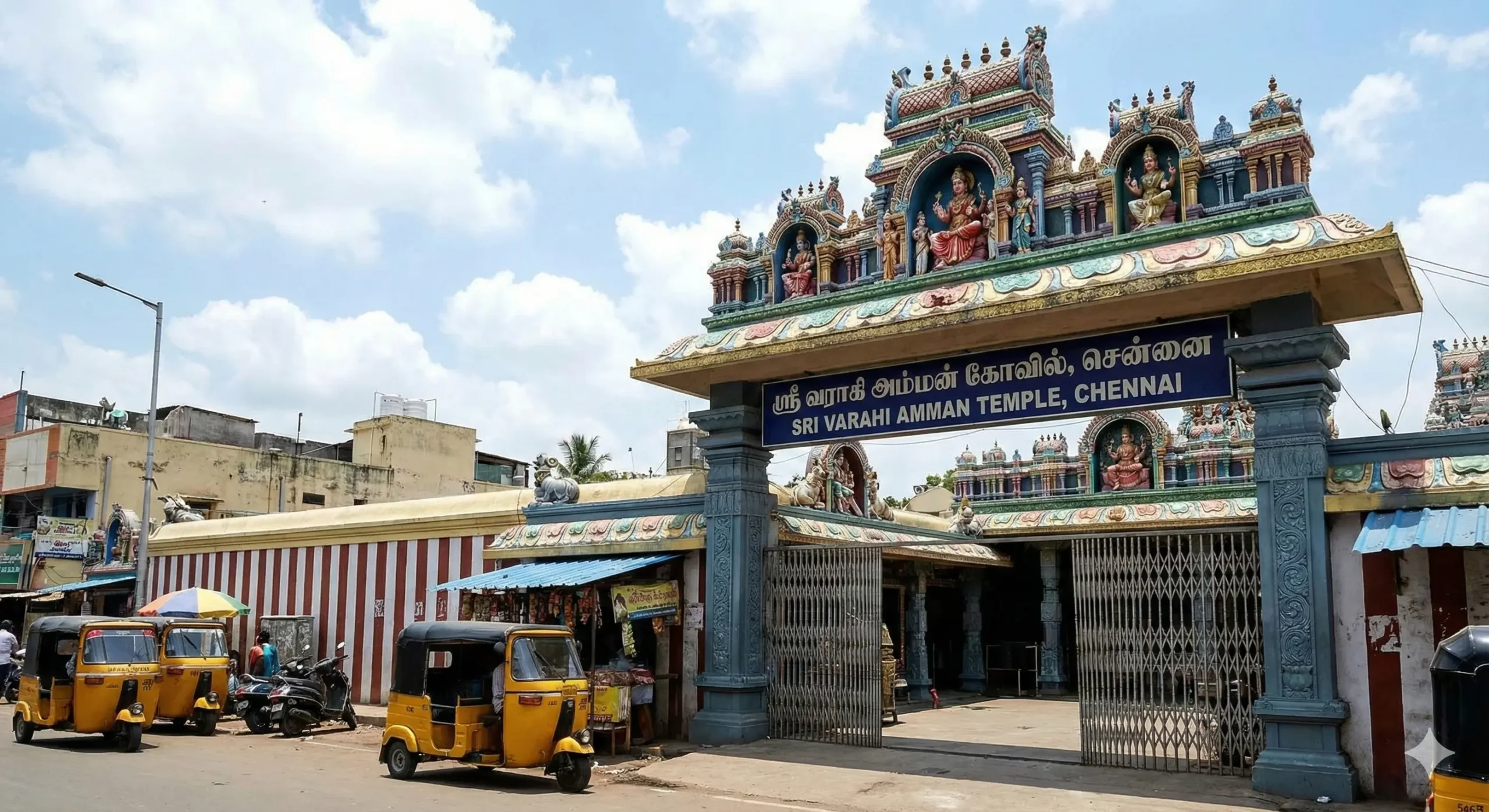
Sri Varahi Amman Temples in Chennai
Chennai, known as the “Temple City of South India,” is home to a remarkable collection of sacred shrines dedicated to Sri Varahi Amman, one of the most powerful goddess forms in Hindu spirituality. Varahi Amman, depicted as a fierce divine mother with the face of a boar, represents strength, protection, and cosmic order. Whether you’re a devout pilgrim seeking spiritual blessings, a curious traveler exploring Chennai’s rich cultural heritage, or a local resident discovering hidden gems in your city, these temples offer a unique blend of architectural beauty, spiritual significance, and peaceful sanctuaries away from the urban hustle.
From ancient temples dating back over a thousand years to modern spiritual centers, Chennai’s Varahi temples are spread across various neighborhoods—each with its own unique charm, rituals, and community. All temples welcome visitors free of charge, making them accessible spiritual destinations for everyone. The following guide presents the most significant Varahi Amman temples across Chennai, organized by location, complete with addresses, timings, and distinctive features to help you plan your visits.
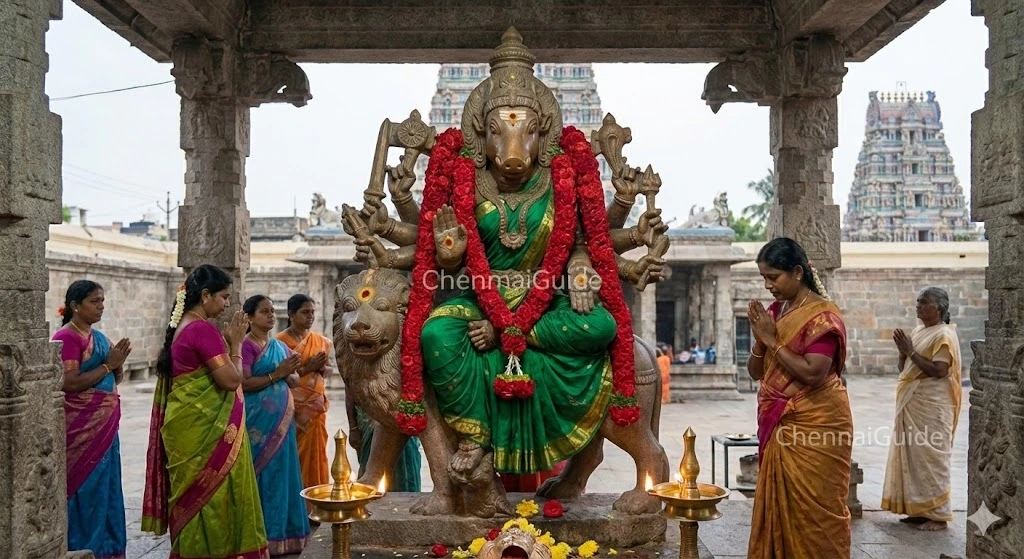
Primary 14 Varahi Amman Temples in Chennai
| # | Temple Name | Location | Timings | Contact/Features |
|---|---|---|---|---|
| 1 | Sri Varahi Amman Temple, Mylapore | 13, Sri Varahi Amman Kovil Street, Mylapore | 6 AM – 12 PM, 4 PM – 8:30 PM | Intricate sculptures, Varahi Homam on Fridays |
| 2 | Sri Varahi Amman Temple, Purasawalkam | No. 15, Ekkatuthangal Main Road, Purasawalkam | 6 AM – 1 PM, 5 PM – 9 PM | Known for prasadam, Pongal celebrations |
| 3 | Sri Varahi Amman Temple, Alwarpet | 21, Varahi Amman Koil Street, Alwarpet | 6:30 AM – 12 PM, 5 PM – 8:30 PM | Panjanga Pooja, community service |
| 4 | Sri Varahi Amman Temple, Nanganallur | 2, 3rd Cross Street, Nanganallur | 6 AM – 12 PM, 4:30 PM – 8 PM | Thulasi Pooja, enthusiastic Navaratri |
| 5 | Sri Varahi Amman Temple, Tambaram | No. 5, Varahi Amman Koil Street, Tambaram | 6 AM – 1 PM, 5 PM – 8:30 PM | Chariot festival, Annadhanam (community feast) |
| 6 | Sri Varahi Amman Temple, Saidapet | 5, West Saidapet | 6 AM – 1 PM, 4:30 PM – 8 PM | Sahasra Lingarchana ritual |
| 7 | Sri Varahi Amman Temple, Velachery | No. 3, Varahi Amman Kovil Street, Velachery | 6:30 AM – 12:30 PM, 5 PM – 9 PM | Over 1200 years old (also Selliamman/Pidariamman Temple) |
| 8 | Sri Varahi Amman Temple, Perungudi | 10, 1st Cross Street, Perungudi | 6 AM – 12 PM, 4 PM – 8 PM | Environmental initiatives, peaceful atmosphere |
| 9 | Sri Varahi Amman Temple, Kotturpuram | 14, Kotturpuram (Little Mount) | 6 AM – 1 PM, 5 PM – 8:30 PM | Evening aarti, Navratri hub |
| 10 | Sri Varahi Amman Temple, T Nagar | 7, North Usman Road, T Nagar | 6 AM – 1 PM, 5 PM – 9 PM | Health camps, educational workshops |
| 11 | Varahi Amman Temple, Ambattur | Kamala Puram, Oragadam | 7 AM – 10:30 AM, 5:30 PM – 7:30 PM | Pomegranate blossoms on Fridays |
| 12 | Sri Varahi Amman Temple, Madhanandapuram | 5th Cross St, Annai Velankanni Nagar Phase 1 | 7 AM – 10 AM, 5:30 PM – 8 PM | Panchami poojas, ornate Vimana decoration |
| 13 | Sri Varahi Amman Temple, Pallur | No 118, Pallur | 8 AM – 12:30 PM, 4:30 PM – 8 PM | Varahi Homam, Navaratri events |
| 14 | Sri Moogambigai Amman Temple | 6/138, 3rd Main Rd, Mookambigai Nagar, Koyambedu | 6 AM – 8:30 PM | Varahi devotion-focused worship |
Additional Prominent Varahi Temples in Chennai
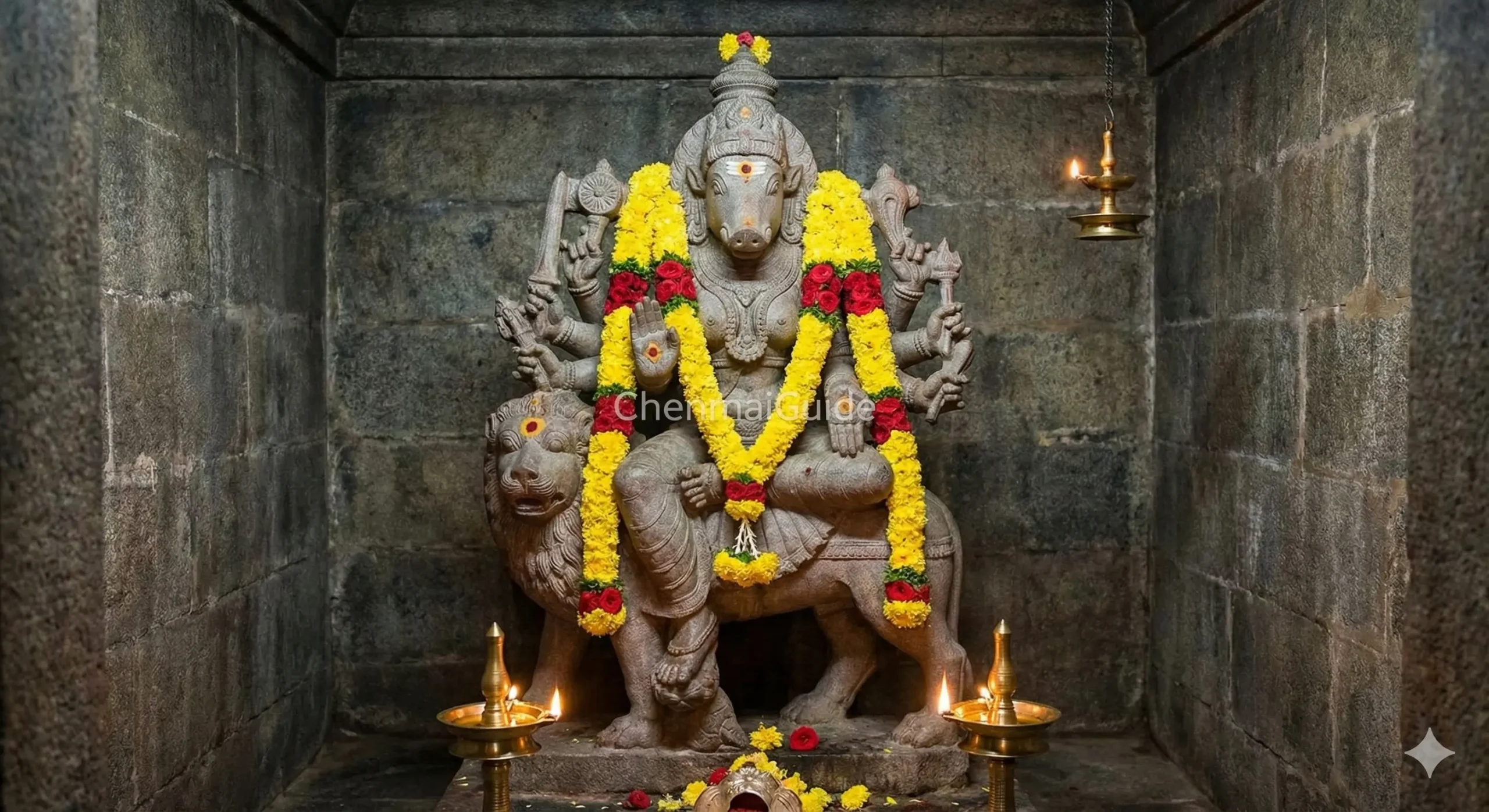
Pachai Amman Varahi Temple, Thirumayilai (East Abiramapuram, Mylapore) – Established in 2012, featuring intricate frescoes and conducting Varahi Homam twice monthly on Panchami days
Shri Maha Varahi Temple, Vanagaram – Located in Odamanagar, Vanagaram, rated 4.7/5, well-maintained with active devotee participation
Sri Maha Varahi Amman and Sapthamathas Temple, Porur – Dharmaraja Kovil Main Road, Porur (6:30 AM-12:30 PM, 5 PM-8:30 PM). Also called Sri Pidari Amman or Elu Pidari (Seven Mothers) Temple, housing all seven Sapthamathas with intricate decoration
OM Sri Maha Sakthi Varahi Peedam, Arumbakkam – No.6, 23, Ashoka Nagar St, Venkata Krishna Nagar, Arumbakkam (Open 24 hours, rated 4.4/5)
Mylai Varahi Temple (Pachai Amman Koil), Mylapore – 12A, Padmanabha Nagar, 1st St, East Abhiramapuram (7:30 AM-10:30 AM, 5 PM-7:30 PM, Phone: +91 98841 02343, rated 4.4/5)
Sri Prathyangira Devi Temple, Sholinganallur – Features Sri Varahi Amman sannidhi immediately after the north entrance (established 1998)
Adhiparasakthi Prithyangara Devi Varahi Amman Temple, Vyasarpadi – MKB Nagar, Mahakavi Bharathiyar Nagar West (6 AM-1 PM, 4 PM-9 PM, rated 4.9/5)
Om Sri Skandasramam Temple, Tambaram – 1, Kambar St, Rajaji Nagar, Ambedkar Nagar, Selaiyur (7 AM-12 PM, 4-8 PM). Dedicated to Lord Murugan with shrine for Varahi Amman featuring huge idols
Key Details About Varahi Amman Temples
Entry Fee: All temples are free to enter and visit
Typical Timings: Most temples operate from 6-7:30 AM in the morning and 4-9 PM in the evening
Special Rituals: The Varahi Homam (sacred fire ritual) is commonly performed on Fridays and Panchami (5th lunar day), believed to bring wealth, protection, and fulfillment of desires
Major Festivals: Navaratri celebrations are particularly grand across all Varahi temples, with special decorations, processions, and cultural programs. The Tamil month of Aadi also sees significant celebrations
Spiritual Significance: Goddess Varahi is depicted with the head of a sow and a woman’s body, representing a powerful manifestation of Shakti known for courage, strength, and divine protection
Community Services: Many temples organize medical camps, educational programs, community feasts (Annadhanam), and classes in traditional arts and crafts.
Sri Varahi Amman: Ancient History and Spiritual Significance
Mythological Origins and Ancient Texts
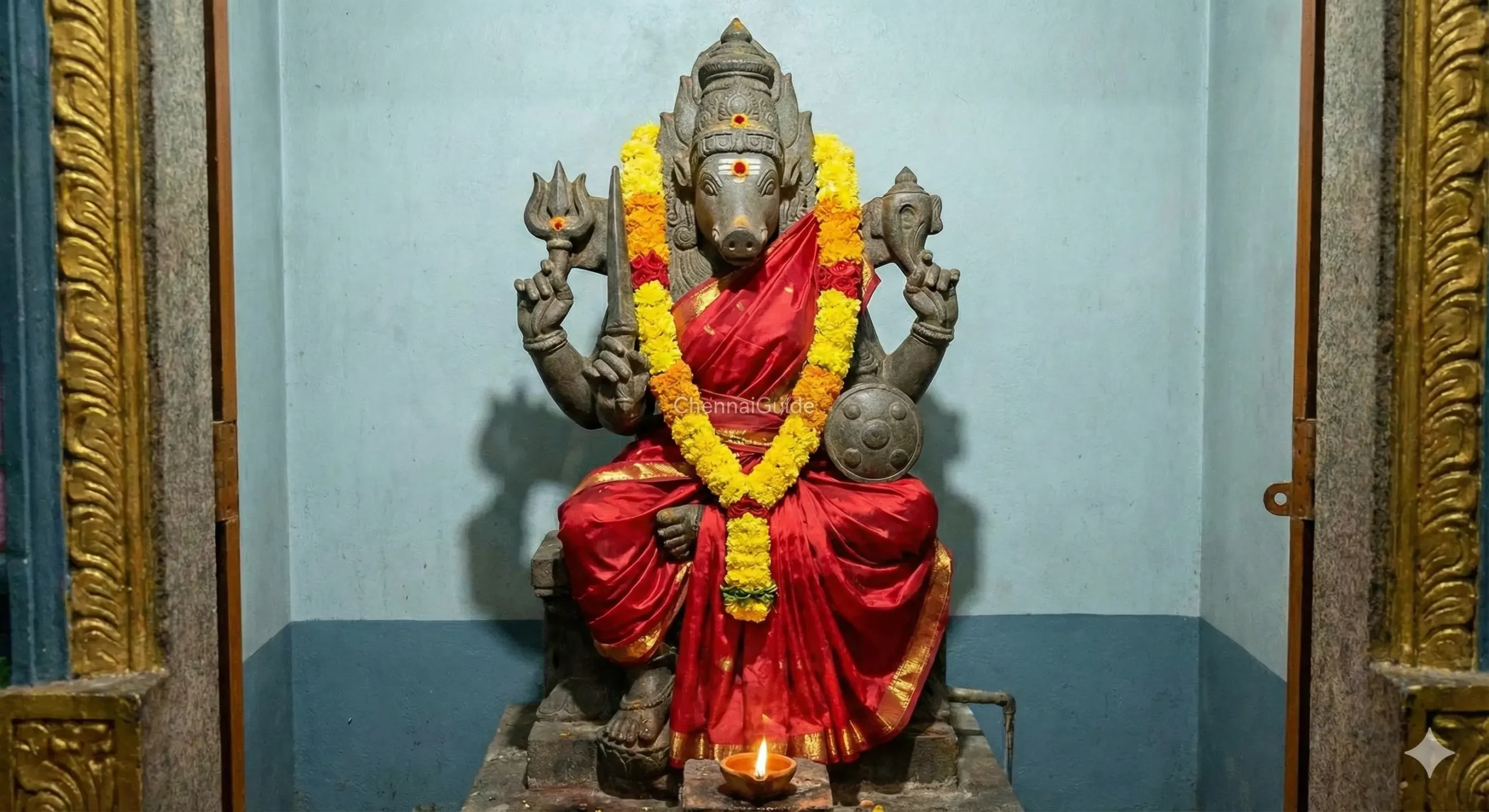
The Creation of Varahi: Divine Emergence from Cosmic Power
Sri Varahi Amman’s origins are traced through multiple ancient Hindu scriptures, each presenting different but complementary perspectives on her divine nature. According to Hindu mythology, Varahi Amman emerged as a manifestation of Shakti, the primordial cosmic energy, rather than as an independent deity.
The Varaha Connection
The most widely accepted origin story connects Varahi to Lord Vishnu’s boar incarnation, known as Varaha. According to the Devi Bhagavata Purana, when the demon Hiranyaksha terrorized the universe and submerged the Earth into the cosmic ocean, Lord Vishnu took the form of a cosmic boar to rescue the planet. With his mighty tusks, Varaha lifted the Earth from the depths, defeated Hiranyaksha, and restored cosmic order (Dharma). From Vishnu’s divine Varaha form emerged the Shakti known as Varahi, literally meaning “the energy or consort of Varaha.”
The Demon Pandasura Legend
Another significant origin narrative describes how Goddess Shakti incarnated as Varahi Amman specifically to defeat the demon Pandasura. The demon had received a boon from Lord Shiva making him invincible against any male being, but could only be slain by a woman not born of another woman. To fulfill this condition, Shakti manifested as Varahi—a divine feminine form with the face of a boar and the body of a woman. With her brother Lord Ganesha’s assistance, Varahi vanquished Pandasura and restored Dharma to the universe.
Varahi in the Sapta Matrikas
Varahi’s most prominent role in Hindu mythology is her position as one of the Sapta Matrikas (Seven Divine Mothers), the most powerful manifestations of Shakti. These seven goddesses are Brahmani (Shakti of Brahma), Maheshvari (Shakti of Shiva), Kaumari (Shakti of Kumara), Vaishnavi (Shakti of Vishnu), Varahi (Shakti of Varaha), Indrani (Shakti of Indra), and Chamunda or Yami (Shakti of Yama).
According to the Devi Mahatmya section of the Markandeya Purana, these seven mothers were created by the cosmic goddess Durga to combat powerful demons. When the demon Raktabija threatened the gods, the divine mother created the Sapta Matrikas from her own divine energy. Varahi played a crucial role in this battle, wielding a chakra (discus), sword, and spear to symbolize her destructive power against evil forces.
Ancient Scriptural References
Varahi is extensively mentioned across multiple ancient texts:
The Markandeya Purana contains detailed hymns praising Varahi as a granter of boons and declares her the regent of the Northern direction.
The Varaha Purana offers elaborate accounts of Varahi’s role in cosmic events, particularly in defeating demonic forces and protecting cosmic order.
The Devi Bhagavata Purana states that Varahi, along with the other Matrikas, was created by the Supreme Mother (Parashakti) to serve as protectors and guardians of the universe.
The Vamana Purana describes Varahi as arising from the back of the Divine Mother Chandika, portraying her as an emanation of the supreme feminine force.
The Vishnudharmottara Purana provides detailed iconographic descriptions of a six-armed Varahi carrying multiple weapons including a staff of punishment (danda), shield (khetaka), sword (khadga), and noose (pasha), with hands held in blessing mudras.
Historical Evolution: The Chola Dynasty Era
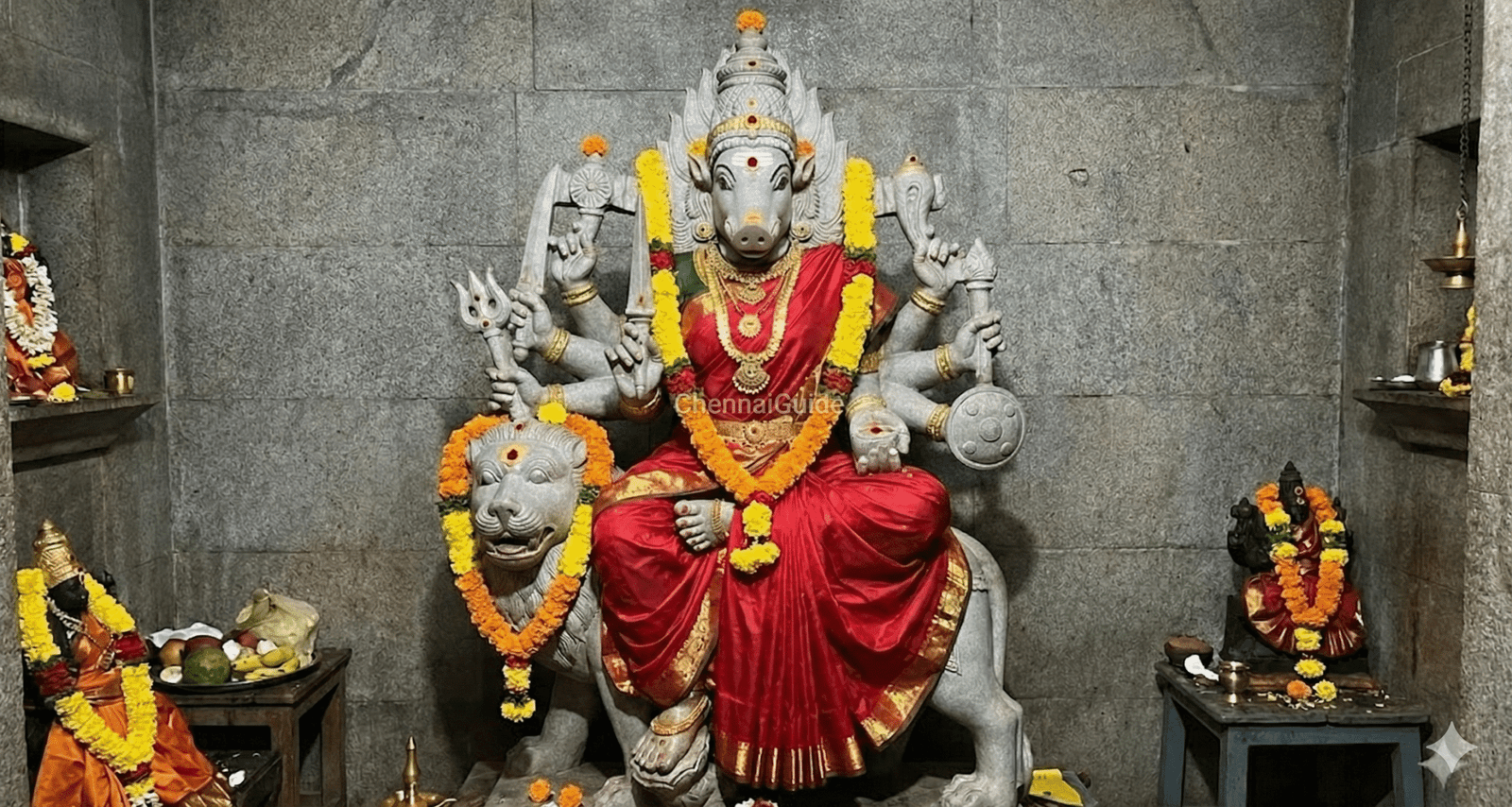
Rajaraja I and Royal Patronage
The worship of Varahi Amman underwent significant expansion and institutionalization during the Chola Empire (9th-13th centuries CE), one of South India’s greatest dynasties. The Chola kings, renowned as warrior-kings, had particular devotion to Varahi Amman, whose qualities of courage, strength, and victory aligned with their martial culture.
The celebrated Chola king Rajaraja I (r. 985-1014 CE) was deeply devoted to Varahi Amman and would invoke her blessings before embarking on military campaigns and important decisions. According to historical accounts and temple inscriptions, Rajaraja I recognized in Varahi the divine embodiment of strength and strategic wisdom required for successful governance.
Varahi Shrine at Brihadeshwara Temple
A remarkable legend involves the construction of the magnificent Brihadeshwara Temple (Peruvudayar Temple) in Thanjavur, built between 1003-1010 CE. According to tradition, when Rajaraja I was searching for an auspicious location, Varahi Amman herself appeared as a wild boar to guide him to the sacred site. In gratitude, Rajaraja I established a shrine dedicated to Varahi Amman within the temple complex.
The Brihadeshwara Temple, a UNESCO World Heritage Site, originally contained eight subsidiary shrines for the Saptamatrikas and other deities. Among these was a dedicated shrine for Varahi Amman featuring intricate sculptures and detailed iconographic representations. However, over centuries, the shrine deteriorated. Today, only fragmented remains of the original Varahi idol survive, preserved in a modern brick shrine in the southern courtyard of the temple.
Pallava Period Foundation
Even before the Cholas, the Pallava dynasty (approximately 575-900 CE) laid the foundation for South Indian temple architecture and religious practices. During this period, temple architecture underwent revolutionary transformation, as evidenced in monuments like the Shore Temple and the Kailasanatha Temple. While the Pallavas primarily focused on Shaivism (Shiva worship), temple inscriptions and sculptures suggest that goddess worship, including various forms of Shakti, was integral to the religious landscape.
Post-Chola Expansion
After the Chola Empire’s decline, subsequent dynasties—including the Vijayanagara Empire and the Nayaka rulers of Thanjavur—continued to support and expand Varahi temples. These rulers became major patrons, adding new architectural features and maintaining the religious significance of existing temples.
Symbolic and Spiritual Significance
Divine Iconography
Varahi is typically depicted as a fierce goddess with the face of a boar (sow) and the body of a woman, symbolizing the integration of animal strength with divine feminine wisdom. The boar face represents earthiness and raw natural power, while the human body represents consciousness and divine awareness.
Her weapons carry specific spiritual meanings: the chakra (discus) represents the wheel of cosmic law; the sword symbolizes discernment to cut through illusion; the shield represents protection; the noose signifies binding of evil forces; and the staff represents cosmic law and punishment of dharma violators.
Tantric Significance
In tantric traditions, particularly Sri Vidya practices, Varahi holds special significance as a powerful Shakti for spiritual transformation. Tantric texts prescribe thirty specific yantras (sacred geometric diagrams) and thirty mantras for her worship, indicating the profound spiritual technology associated with her veneration.
Modern Worship and Contemporary Significance
Varahi Amman continues to be actively worshipped across Tamil Nadu and other regions. Modern devotees invoke her for protection, overcoming obstacles, spiritual advancement, and fulfillment of material desires combined with spiritual purpose.
Navaratri Festival celebrates the goddess with special rituals and cultural programs, while Panchami Days (the fifth lunar day) hold particular significance for Varahi worship, featuring the Varahi Homam (sacred fire ritual). Annual temple festivals feature processions, music, and elaborate ritual worship.
In the contemporary context, Varahi Amman’s symbolism offers spiritual guidance through her strength and courage, her role as protector of dharma (righteousness), and her integration of fierce power with maternal compassion, serving as a balanced model of feminine divinity.